← Home · Laboratory

Proctor Compaction Testing in Toowoomba: AS 1289 Compliance for Earthworks

Together, we solve the challenges of tomorrow.

DISCOVER →

Compaction control on the Darling Downs starts with a reliable reference density. AS 1289.5.1.1 (Standard) and AS 1289.5.2.1 (Modified) define the Proctor test procedures that underpin every specification in Toowoomba. The city’s geology shifts abruptly across its 700-metre elevation range: dense basalt clays on the eastern escarpment give way to alluvial silts along West and Gowrie Creeks. A single default compactive effort rarely suits both. The Atterberg limits screening tells us beforehand whether the fines are likely to swell during moisture conditioning. When the project involves deeper fill lifts, we pair the Proctor result with field sand cone density checks to verify that the specified relative compaction is actually achieved layer by layer.

A one-percent moisture deviation from optimum can lose 5% of the target dry density in Toowoomba’s structured basalt clays.
Scope of work

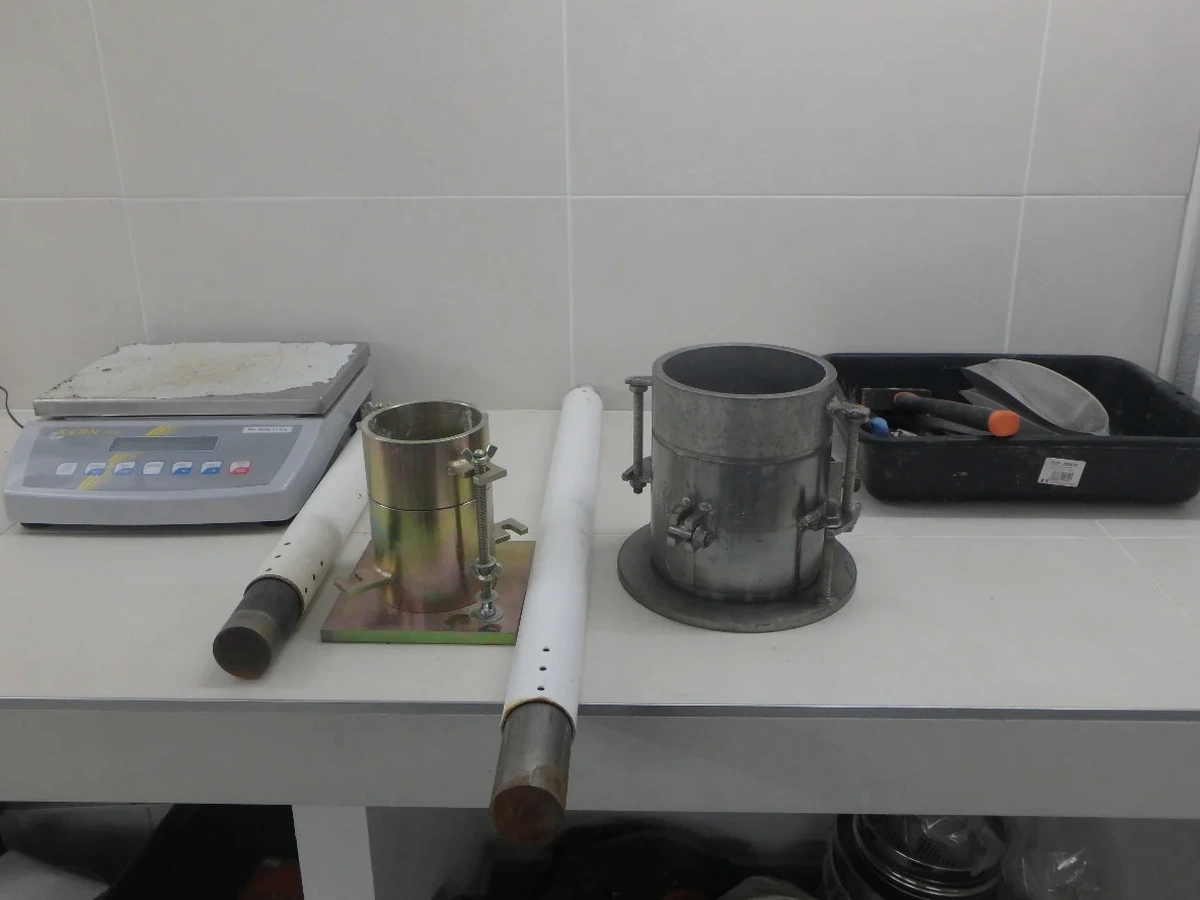
What we see repeatedly in Toowoomba is that Modified Proctor compactive effort (2,700 kN-m/m³) can overestimate achievable density in residual basalt clays, especially after rain. The wet season saturates these structured soils and turns haul roads into a testing challenge. Standard effort (600 kN-m/m³) often represents site conditions more faithfully for residential pads on the western plateau. Our lab runs both methods on the same material when the specification is unclear. Key variables we control:
Proctor Compaction Testing in Toowoomba: AS 1289 Compliance for Earthworks
Technical reference image — Toowoomba

Area-specific notes

Toowoomba sits at 691 metres above sea level on the Great Dividing Range, exposed to intense summer storm cells that can deliver 50 mm of rain in an hour. Water entering an unprotected fill before compaction turns a compliant material into an under-compacted liability. The Proctor curve shifts—optimum moisture rises and maximum dry density drops—so a test run on dry-season samples loses relevance. We see this most often in subdivision earthworks around Glenvale and Cotswold Hills, where contractors push to beat the weather. A re-test after significant rainfall events keeps the nuclear gauge or sand cone readings correlated to a valid target. For deeper understanding of how water affects strength in these fine-grained soils, our team often recommends a triaxial test to evaluate the effective stress parameters of the compacted material.

Need a geotechnical assessment?

Reply within 24h.

Email: contact@geotechnicalengineering1.xyz

Technical parameters


ParameterTypical value
Standard effort (AS 1289.5.1.1)2.5 kg hammer, 300 mm drop, 3 layers × 25 blows
Modified effort (AS 1289.5.2.1)4.9 kg hammer, 450 mm drop, 5 layers × 25 blows
Mould volume1,000 cm³ (standard mould)
Oversize sieve19.0 mm or 37.5 mm depending on method variant
Moisture pointsMinimum 5 to define the compaction curve reliably
Typical MDD range (basalt clay)1.65–1.85 t/m³ (Standard); 1.80–2.00 t/m³ (Modified)
Typical OMC range (basalt clay)18–26% (Standard); 14–21% (Modified)
Reporting standardAS 1289.5.4.1 for oversize correction applied

Linked services

01

Standard and Modified Proctor Tests

Full compaction curves with five or more moisture points, oversize correction, and air-voids lines plotted per AS 1289, delivered with a concise interpretation for site supervisors.

02

Field Density Correlation

Nuclear gauge or sand cone testing referenced directly to the Proctor curve, with relative compaction reported layer by layer for QA sign-off.

Standards used

AS 1289.5.1.1, AS 1289.5.2.1, AS 1289.5.4.1, AS 3798 (Earthworks)

FAQ

What is the difference between Standard and Modified Proctor in AS 1289?

The compactive effort differs by a factor of about 4.5. Standard Proctor uses a 2.5 kg hammer dropping 300 mm with 3 layers × 25 blows. Modified Proctor uses a 4.9 kg hammer dropping 450 mm with 5 layers × 25 blows. Modified effort simulates heavier rollers and is typical for highway and commercial earthworks. Standard effort often matches the energy of smaller compaction plant used in residential subdivisions across Toowoomba.

How much does a Proctor test cost in Toowoomba?

A Standard or Modified Proctor compaction test typically ranges from AU$160 to AU$290 per sample, depending on the method variant, number of moisture points required, and whether oversize correction is needed. Turnaround is usually three to four working days.

Why does the Proctor optimum change after rain?

The compaction curve is not a fixed material property. It reflects the soil structure at the time of testing. Rain can hydrate clay minerals and cause aggregation, which reduces the dry density achievable at a given moisture content. A Proctor test run on saturated site material will show a higher optimum moisture and a lower maximum dry density than the same soil tested dry. This is why re-testing after heavy rainfall is standard practice for wet-season earthworks in the Toowoomba region.

Location and service area

We serve projects across Toowoomba and surrounding areas.

View larger map