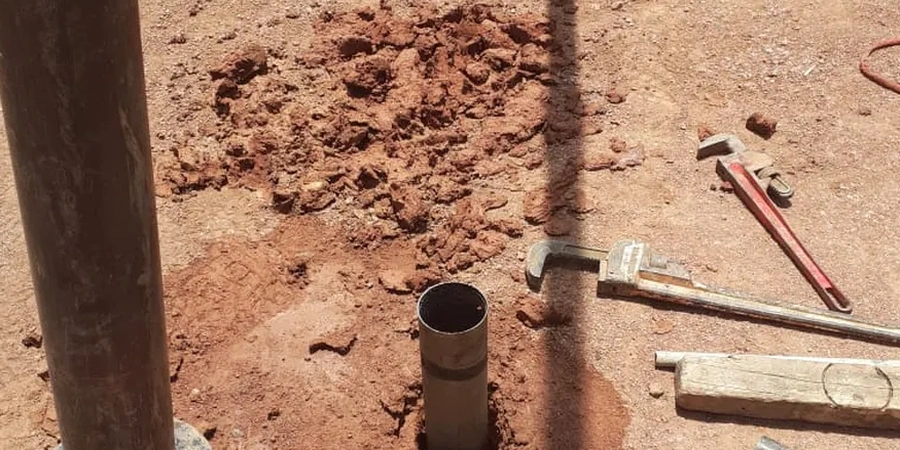
In-situ testing forms the backbone of geotechnical site investigation across Toowoomba and the Darling Downs region, providing direct measurements of soil and rock properties in their natural, undisturbed state. Unlike laboratory tests that rely on transported samples, in-situ methods capture the true behaviour of the ground under existing stress conditions, moisture regimes, and structural fabric. This category encompasses a broad suite of field techniques—from density assessments and strength profiling to permeability evaluations—all conducted on the project site. For engineers and developers working in Toowoomba's variable terrain, these tests deliver the reliable parameters needed for foundation design, earthworks control, and slope stability analysis, reducing the uncertainty that can lead to costly over-design or, worse, geotechnical failure.
Toowoomba's geological setting makes in-situ testing particularly critical. The city sits atop the Great Dividing Range, underlain predominantly by the Walloon Coal Measures and weathered basalts of the Main Range Volcanics. These formations produce highly variable residual soils—ranging from stiff reactive clays on basalt plateaus to colluvial silts and sands along escarpment slopes. The region is also known for its expansive clay soils, which undergo significant volume changes with seasonal moisture fluctuations. In-situ testing such as the field density test (sand cone method) becomes essential for verifying compaction levels during earthworks, ensuring that fill materials achieve the specified relative compaction despite the challenging moisture-sensitive nature of local clayey soils.
Australian Standards govern all in-situ geotechnical activities, and practitioners in Toowoomba must adhere to the AS 1289 series for soil testing methods. Specifically, AS 1289.5.3.1 details the sand cone method for field density determination, while AS 1289.6.3.2 covers standard penetration testing (SPT), and AS 1289.6.7.1 addresses static cone penetration tests. These standards define equipment calibration, procedural steps, and reporting formats to ensure consistency and legal defensibility of results. Additionally, local council requirements—such as those from Toowoomba Regional Council—often mandate specific in-situ testing frequencies for subdivision earthworks, road subgrades, and stormwater infiltration systems, referencing the relevant Australian Standards as minimum compliance benchmarks.
The types of projects requiring in-situ services in Toowoomba are diverse. Residential subdivisions on the city's expanding western and southern fringes demand rigorous compaction verification through methods like the sand cone density test to certify building platforms and access roads. Commercial developments, including the growing industrial precincts around Charlton, rely on in-situ strength testing to validate foundation bearing capacities. Infrastructure projects such as the Toowoomba Second Range Crossing and ongoing Council road upgrades utilise in-situ permeability and plate load tests to ensure long-term pavement performance. Even smaller-scale works—retaining walls, stormwater detention basins, and rural dam constructions—benefit from targeted in-situ assessments to confirm design assumptions under local ground conditions.
In-situ testing involves performing geotechnical measurements directly on the ground at the project site, without removing soil or rock samples. It is preferred because it assesses materials under their natural stress state, moisture conditions, and structural arrangement, eliminating disturbances caused by sampling, transport, and handling that can skew laboratory results. This leads to more representative parameters for design.
The primary standard is the AS 1289 series, which governs soil testing methods. Key parts include AS 1289.5.3.1 for sand cone density testing, AS 1289.6.3.2 for standard penetration tests, and AS 1289.6.7.1 for cone penetration tests. AS 1726 also provides guidelines for geotechnical site investigations. Local Council specifications in Toowoomba typically reference these standards for compliance.
Testing frequency depends on the project scale and Council conditions, but as a general rule, Toowoomba Regional Council requires one field density test per layer per 500 square metres of fill area, or per 100 linear metres of road subgrade. A standard residential lot may need a minimum of three to five tests per compacted layer to demonstrate compliance with the specified relative compaction, often 95% to 98% of standard maximum dry density.
For reactive clay sites common across Toowoomba's basalt plateaus, standard penetration testing (SPT) and cone penetration testing (CPT) are typically used to assess soil strength and consistency. Pressuremeter testing may be employed for deeper or more sensitive structures. Additionally, in-situ moisture profiling and density tests help characterise the active zone affected by seasonal moisture changes, which is critical for designing slab-on-ground foundations.